Saturday, April 18, 2009

A Random Thought ----- II

The administration at the helm in Delhi have in the first instance blundered drastically by not giving strict directions for stopping the mass migration of not less than half a million KPs in a single go from Kashmir in 1990 by making all security arrangements for them urgently at any cost and again subsequently by not taking instant and effective measures to make possible our immediate return to our homes without losing much time to safeguard the national interest first and our individual rights second. Now much of water has flown down the rivers of Kashmir and the conditions have deteriorated substantially and our return has become much more complicated than before.
Now looking at the issue from our point of view, there was no alternative for this miniscule minority community but to fly for our lives given the conditions in the valley in 1990 as the consequence of complete breakdown of the civil administration and the intermittent killings besides all kinds of other worst violence against our innocent people. This worst cruelty against us was deliberate and strictly according to the action plan of the terror machinery so as to remove all obstacles to make Kashmir an open space for their foul play. The administration instead of discouraging their nefarious designs helped them primarily by way of encouraging the KP exodus.
The suffering of these hapless citizens of India in most inhospitable circumstances outside valley in early nineties in makeshift residential arrangements cannot be expressed in words but the courage that they displayed in facing the trauma is really appreciable. Being almost hundred percent educated and with enough initiatives the community members toiled hard individually to face the worst misfortune of their lives. There was no doubt extensive help extended from social and political organizations throughout the country especially in getting our illustrious youth admitted in various educational institutions mostly in Maharashtra State ruled then by RSS/BJP coalition. And the most gratifying part of the situation is that our kids fought bravely the misfortune by taking fast strides in their careers first in the educational institutions and then in the corporate world. We’re really proud of our youth that they didn’t really let us down and our glorious past. They’re showing their worth in every field wherever they are by digging deep the pillars of our national and cultural strength.......(not concluded)

Friday, April 17, 2009

A Random Thought----- I

While I was alone on my routine evening walk today my thoughts again shifted towards our deplorable condition living out of the bounds of our roots for such a long time aspiring fervently to gain our lost paradise. The multi-pronged problem of our displacement from the valley has acquired various ramifications during these years. On the one hand the situation in Kashmir does not guarantee any safety for this minuscule minority at the present moment and on the other the security agencies are unable to contain terrorism despite ultimate efforts in the whole of India not to speak of the anti India tirade in the valley of Kashmir. We are unable to plead our arguments forcefully in the national and international fora about our forced displacement in early 1990 upon complete breakdown of the administrative machinery in the valley such that some solid steps would be taken to improve our lot or some more relief measures extended in our favour till the final resolution of the problem. An important feature that makes this community almost insignificant is that our capacity to vote has been stalled because we have no reserved candidates to vote for neither in the state assembly nor in the Parliament. The political parties whatsoever in power have nothing to gain out of resolving any of our problems as such. Our names do exist in the electoral rolls of our respective constituencies in the valley but there is no point in using our right to vote for the valley candidates who have neither access to our present places of settlement nor are they capable to solve any of our problems.
The state and the central government both have not so far given any suitable attention to our plight on its merits firstly for our individual democratic rights as the citizens of India and secondly for the larger interests of the country. The authorities have never tried to judge the situation on ground that all the traces of India in Kashmir are gradually dwindling and the local administration though sworn by the constitution of India does not discourage the trend for fear of losing public support in their favour. Moreover all traces of Hindu culture that were present in abundance in the valley are dwindling day after day. All important Hindu installations in the form of temples and names of places etc are being encroached upon gradually such that almost all Hindu flavour that existed in the valley before 1990 is missing. The fundamentals of the policy for continuing India in Kashmir is essentially to strengthen sincerely all available Indian elements there on priority but the authorities have miserably failed in this important function. The Kashmir Pandit (KP) was the strongest pro India force in Kashmir that belonged to its soil and his absence from the scene has given a severe blow to the Indian influence in Kashmir. Our administrative machinery is probably unaware of this important fact or is deliberately shying away from this important responsibility towards the nation......(not concluded)

Saturday, April 11, 2009

Kashmir Tulips in Bloom

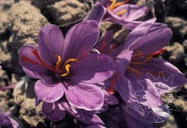
Kashmir Tulips, you're again in bloom. Why not! it's the spring, the loveliest season of the year in Kashmir. You probably do not know that some of your admirers cannot enjoy your fresh colours. They’re out of the bounds of Kashmir for about two decades now. You and lots of other flowers that bloom in the early spring especially Yemberzal, Virkem and bredmushek are also ignorant of their absence. The reason is not far to seek. They left with a hope to return soon. They didn’t land in any strangers land but in some other part of their own land. Their new found neighbours treated them well; helped them in their adversity but they couldn’t forget their divine mother Kashmir. The nostalgia of Kashmir, its scenes and scenery, mountains and valleys, water and snow dogged them persistently. Do you know they tried their best to bring in Kashmir in their vicinities. They made the replicas of their various temples, gods and goddesses that they worshipped there and named their ghettos and colonies by the same Kashmir gods and goddesses. They also tried to celebrate with the same gaiety many of their favourite Kashmir festivals but still they couldn’t get Kashmir closer to them. The nourishing cool breeze coming down from the majestic snow covered peaks, the shade of Chinars and Villows, the blessings of Mata Kshir-Bhawani and Sharika could not be approached. They even tried to plant some Kashmir flowers and bushes in their small gardens and fed them with cold water frequently but these got withered by the hot air of the plains. They had even tried their best to forget Kashmir by trying to get accustomed to the foods and other habits of the plains and speaking the language of their new found neighbours but your remembrances reverberated forcefully and today was the turn of your blossom that took the lead.

DAL-LAKE of Kashmir


Dal-Lake or only Dal as called in Kashmir is the crown of Kashmir, the paradise on Earth. It’s located in the vicinity of Srinagar, the summer capital of Jammu and Kashmir State. The huge Himalayan urban lake with blue deep waters is astonishingly so big that human eye cannot cross its limits. With an area of about 18 Kilometers it has five basins and a number of channels that are well linked with each other. The sparkling quiet waters of Dal-Lake surrounded by snow-capped mountains on three sides undoubtedly mark it as one of the most beautiful lakes of India. It is the second largest lake in Kashmir with numerous gardens and orchards along its shores. The world famous Mughal Gardens-- Nishat, Shalimar, Cheshma-Shahi and Pari-Mahal are on its Eastern bank while the sprawling campuses of the University of Kashmir and the Regional Engineering College along with the famous Hazratbal Shrine are on the West. Two hillocks overlooking the lake are one with the ancient Shankaracharya temple atop and the other Hari Parbat housing numerous sacred Hindu temples, a Gurdwara and a Muslim shrine. The glorious Mughal gardens on its shores add to the beauty of Dal. Out of about five hundred gardens laid down in 16th to 17th century, only a few still survive.
Houseboats, the gorgeous floating beauties form an indelible part of the Lake for their twin purpose, one that they serve as majestic floating lodges in the waters with better facilities than the best hotels for the tourists and two that they can move to any location in the Lake as desired. Most houseboats are the representatives of brilliant Kashmir art and architecture, so beautifully built and decorated with Kashmir art that cannot be described in words.
Then there are the Shikaras, the small ornate versions of the gondolas of Venice that offer ferry rides to and from the banks of the lake to the houseboats besides always ready to take tourists to a romantic and peaceful ride and soothe their nerves over the slightly rippling waters. They also offer them the most exotic view of the splendid scenery of the lake.
Dal-Lake is the source of tons of vegetables and flowers grown along its banks in the famous floating gardens and the fresh product is always available for sale on the sailing boat shops on the waters of the lake along with the lotus stem (Nadru in Kashmiri) the most preferred Kashmir vegetable. Nadru found in Dal is considered of the best quality for its taste and size. The naturally grown large beautiful flower Lotus or Kamal is found in abundance in Dal. There are plenty of fish in Dal-Lake and fishery the second largest industry of the region is centered on this lake..... (to be continued)

Thursday, April 9, 2009

KANGER

The people of Kashmir are in the habit of using a kind of fire-pot called Kanger in local dialect to warm their body in winter. Kanger is an artistically designed household gadget very popular for its use. A fully baked earthen bowl with somewhat closed opening is wrapped wholly with a beautiful wicker-work basket with suitable handles above making it quite safe to handle profusely with burning charcoal inside. This hot Kashmir firepot (Kanger) is usually taken inside Pharen, the traditional trademark Kashmir outer garment, a loose long robe with wide open sleeves usually made of course thick woolen cloth and held close to body mostly with both hands both while sitting, standing or walking. Kashmir people have a unique habit of doing all work quite comfortably in winters while sitting on a flat surface having a hot Kanger inside their Pharen keeping them warm. All Kashmir handicraft artisans do almost all artistic work quite efficiently sitting indoors in closed quarters while holding a Kangri under their Pharan. All this undoubtedly gives a reason to mention that it’s definitely an indication to the sharp wit and artistic taste of the people of Kashmir who have very wisely created a unique wonderful gadget for themselves to fight the severe cold of the valley much before the modern day cold fighting equipment was invented. Though nowadays most affluent houses in Kashmir have got all the modern electronic heating arrangements installed but the Kanger continues to occupy its important traditional space. Kanger is not only famous for its legitimate use but for its large association with Kashmir tradition and ethos. It enjoys an important place in the Kashmir folklore as almost all notable legends gracefully eulogize it here or there. Kanger has found an important place in some Vaakhs of the famous mystic poet of Kashmir Lalleshuri while describing some essential divine secrets. Moreover there is not a single Kashmir poet, writer or an artist both modern and ancient who hasn’t given it an important place in his or her creative art. Its use on special occasions like weddings, engagements and festivals in all seasons is worth a mention. When the new found relatives from daughter’s or son’s in-laws are received for the first time in the house they’re welcomed first by putting a pinch of incense seeds in a beautifully made Kangri with live charcoal inside. Immediately the whole atmosphere is filled with a special fragrant smoke considered auspicious and liable to ward off all evil spirits. The ritual is common with both Kashmir Muslims and Hindus. The displaced KPs, now living outside Kashmir continue with the tradition especially in Jammu where their establishments are in quite large number.

Monday, April 6, 2009

Kashmir Handicrafts---III

Kashmir is home of some of the best wood carving done anywhere in the world. Wood carving is done on a variety of objects ranging from furniture ( Tables, chairs, writing desks, dinning tables, nest sets, Toll Buoys, Screens, side Boards etc) to articles of personnel use like jewelry boxes, photo frames and various other articles. Walnut wood is the most common wood used for carving of above items. Kashmir is the only part of India where the Walnut trees grow, its colour, grain and sheen are unique and the carving and cut work that is done on this wood is of the finest quality. Walnut wood from the root portion is almost black and the grain here is much more pronounced than the wood of the trunk, which is lighter in colour. There are several varieties of carvings i.e. deep carving usually with dragon or lotus flower motifs, shallow carving done all over the flat surface open or lattice work, usually depicting the chinar motifs, and semi carving. The advantage of semi carving is that it allows the grain of the wood, to be displayed together with the carver’s skill. Wax polishing brings out the inherent sheen of walnut wood.

Sunday, April 5, 2009

Kashmir Handicrafts ---- II

Papier Mache is one of the exclusive Kashmir art. Different moulds are used to make various shapes and figurines. After the surface is made smooth the base colours are applied. Then the main work of making intricate patterns and designs starts. Very small brushes called kalam are used to make various shapes, designs peculiar to this art on the outer surface of these articles. Beautiful designer pieces both small and large are made especially vases, jewelry boxes, figures of animals and birds painted with colourful pictures and floral designs. Beautiful Christmas trees made by these artisans are high in demand worldwide and earn millions of dollars in the international market. The colours used are not chemically based but are traditionally made out of local herbs and materials and that make them last their shine quite longer. Some papier mache art pieces made long ago still keep their shine as are preserved safely in various museums worldwide........ (to be continued)